
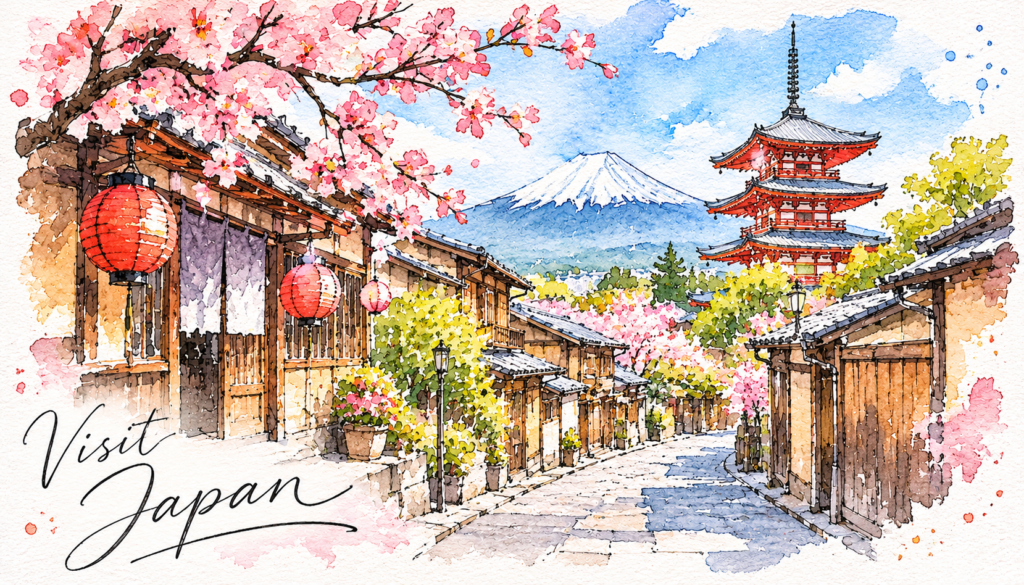
When I was about six or seven years old, I used to watch the anime Sailor Moon.
My sister, who watched it with me, still insists that she was the real fan and the driving force behind turning on the television whenever the show was on.
And while I remember enjoying it well enough myself, over the years I became more drawn to Dragon Ball and One Piece.
But Sailor Moon left me with something else.
Unlike the fantasy worlds of some other anime, its story took place in what appeared to be an ordinary Japanese city. And I remember watching those streets, houses, and everyday scenes and wondering:
Does Japan really look like that?
That simple question was enough to put Japan on my list of places I wanted to visit.
And it stayed there for years.

The Beginning of an Adventure
I’d wanted to travel and explore the world for as long as I could remember, but I didn’t really get the opportunity until I was 23.
After finishing my bachelor’s degree, I ended my five-year relationship with my boyfriend, decided to take a gap year, and packed my suitcase for six months in Japan.
But I thought I could use that time wisely and gain some work experience while traveling. So I applied for an internship in Tokyo in my field of study: architecture.
And I got accepted!
I was so excited about the opportunity, and so pleased that I’d managed to convince my parents that this was a good idea and gain their support, that I happily accepted one rather significant condition.
The internship would be completely unpaid.
For six months.
Now, unpaid internships were something I was familiar with from Germany, particularly when students completed a few weeks of practical training as part of their studies.
But six months of full-time work without any salary?
That sounded suspiciously like labor exploitation to me.
Did I care?
Not particularly.
I was going to Japan!
This would be my first solo trip, my first real adventure, and the beginning of a whole new chapter in my life.
I was ready.
Or so I thought.
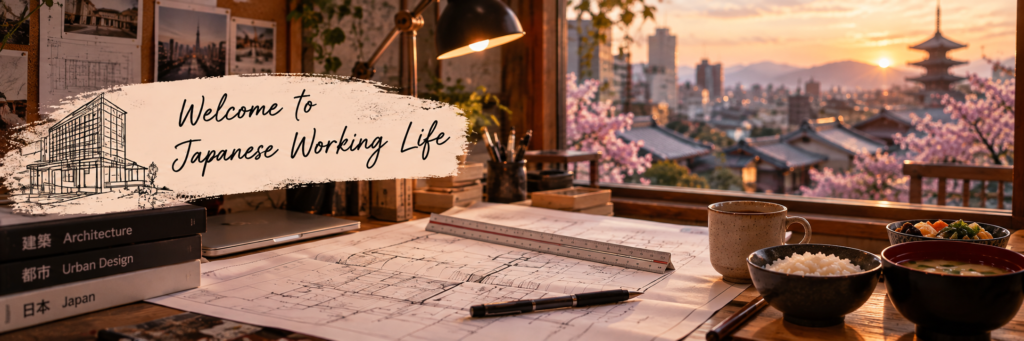
Welcome to Japanese Working Life
On my first day at the architecture office, I eagerly asked my boss what my working schedule would look like.
After all, I had six months in Japan and plenty of adventures to plan around my internship.
His answer?
Monday to Saturday, from 8 a.m. until 10 p.m.
I was stunned.
Fourteen hours a day. Six days a week.
And not a single yen in salary.
Surely, this would be considered exploitation where I came from. But I was already there, and I had been the one asking for the internship in the first place.
Besides, there was one advantage.
My boss cooked lunch and dinner every day in the office’s tiny kitchenette, which meant I could save quite a bit of money on food.
So I stayed.
And somewhere between the long working hours and the occasional free day, I began discovering Japan.
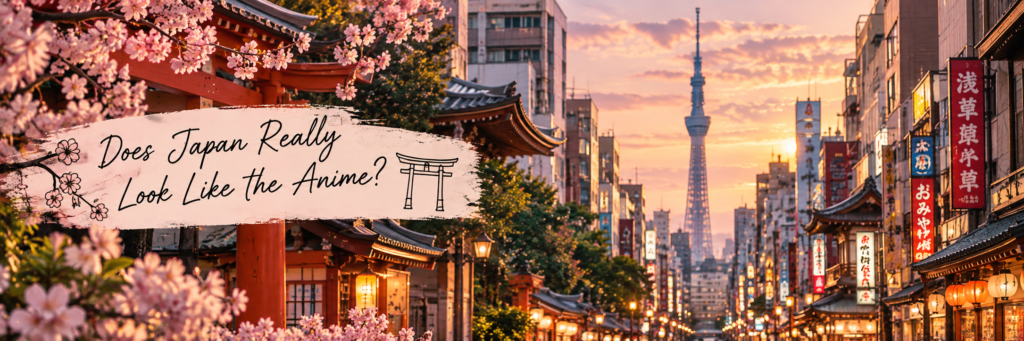
Does Japan Really Look Like the Anime?
Yes. It actually does!
The houses, the streets, the cityscapes, the little details of everyday life—so much of what I’d seen in anime as a child suddenly existed right in front of me.
I found that absolutely fascinating.
But Japan had far more to offer than the familiar scenery of my childhood television shows.
In my eyes, Japan is an extraordinarily beautiful country, with an incredible diversity of landscapes, cities, and traditions.
From remote little towns to enormous, bustling metropolises. From mountains and volcanoes to the ocean. From centuries-old religious traditions to an intensely modern, technologically advanced society.
There was so much to discover.
One of the things that surprised me most was how peaceful even a city like Tokyo could feel.
Of course, Tokyo is enormous and incredibly busy. But despite the crowds, I often experienced a remarkable sense of order and tranquility.
I suspect much of that impression came from the way people behaved in public.
I rarely witnessed anyone making a scene or raising their voice. Even the traffic seemed relatively calm, apart from the occasional advertising truck driving through the streets promoting some pop band’s latest album.
People queued patiently, followed the rules, and carried their rubbish home rather than leaving it behind.
On the trains, most passengers seemed absorbed in their own thoughts or their phones.
And everything appeared to function with extraordinary efficiency.
The restaurant service, the public transportation, the organization of everyday life—it amazed me how smoothly so many things worked in a city with such an enormous population.
I particularly loved the little shrines scattered throughout Tokyo.
Sometimes they appeared in the most unexpected places, tucked between tall buildings or hidden just a few steps away from busy streets.
You could be surrounded by the noise and movement of the city, turn a corner, and suddenly find yourself in a quiet little sanctuary.
Those contrasts fascinated me.
And perhaps the greatest contrast of all was between Japan’s technological development and the traditional values that still seemed to shape so much of everyday life.
I found it remarkable how strongly cultural customs and social expectations appeared to endure in a country that was, in so many other respects, at the forefront of modernity.
I don’t necessarily see that as good or bad.
But I find it fascinating how a society can embrace technological progress while maintaining such a strong connection to its traditions.
Of course, those same traditions and expectations also influenced the part of Japanese life I was experiencing most intensely.
Work.
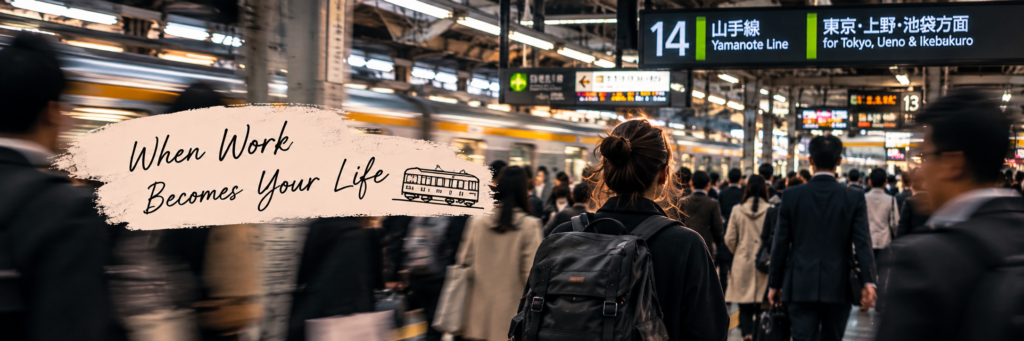
When Work Becomes Your Life
Throughout my internship, I complained about my schedule constantly.
I had never imagined allowing my life to be consumed by a job, let alone being content with it.
Not as an everyday lifestyle, and certainly not at 23, when I was young, eager to explore, and had imagined this trip would be one great adventure.
Instead, I spent most of my days in an office.
And apparently, I was supposed to consider myself lucky.
I later heard about other architecture offices where people worked seven days a week, and where interns didn’t even receive the two daily meals I was getting.
Meanwhile, I watched my colleagues.
Every morning, they got out of bed, put on their immaculate clothes, and arrived at the office with the most polite, respectful attitudes imaginable.
They appeared motivated, disciplined, and committed.
And I couldn’t understand how they did it.
As the months passed, my own motivation slowly disappeared.
By the end of my fourth month, I had made a group of friends who were also traveling through Japan.
We’d met because we happened to live in the same shared house. With my working hours, I certainly wouldn’t have had many opportunities to meet them otherwise.
They would tell me about their adventures, the places they’d visited, and the things they’d experienced.
And what did I have to contribute?
Stories about what we’d eaten at the office.
Eventually, I asked my boss whether I could take a few days off from my unpaid, entirely voluntary internship.
He didn’t simply say yes or no.
Instead, he arranged a meeting with my colleagues to discuss whether allowing me a break might restore my motivation and therefore be a reasonable decision.
Imagine needing a committee to determine whether an unpaid intern deserves a few days to enjoy the country she traveled halfway around the world to see.
I was exhausted.
And I’d only been doing this for a few months.
For some of the people around me, long working hours weren’t a temporary inconvenience. They were an established part of their professional lives.
What I struggled to understand was how they seemed to accept, and sometimes even aspire to, a lifestyle that I found so difficult.
I wondered whether they genuinely wanted that life, whether they simply accepted what was expected of them, or whether the distinction was more complicated than I could understand.
A Lesson I Didn't Expect to Learn
Eventually, I reached my breaking point.
One day, I started crying in the office.
My boss noticed and asked me what was wrong. He told me he felt responsible for me and wanted to help.
So I tried to explain.
I was overworked. I needed a break. I needed time to process everything I’d experienced, to sort through my thoughts and feelings, and simply to relax.
I didn’t need anything extraordinary.
Just a few days to breathe.
His solution?
He suggested giving me more detailed work that required greater concentration.
That way, he explained, I wouldn’t have time to think about my problems.
I was speechless.
To him, it apparently seemed like a reasonable way to help. To me, it was the exact opposite of what I needed.
And that moment stayed with me.
During my time in Japan, I’d noticed suicide-prevention messages in the subway, reminding people of the families waiting for them at home. I’d also heard about Aokigahara, the forest near Mount Fuji that has become associated with suicide.
At the time, I began connecting those things in my mind with the pressures I’d witnessed in working life.
Looking back, I know the causes of suicide and mental distress are far more complex than any single cultural expectation or working environment.
But as a young woman experiencing exhaustion and feeling that my need for rest wasn’t understood, those observations affected me deeply.
I began questioning what happens when responsibility, duty, and social expectations leave too little room for a person’s emotional needs.
And I began thinking about the kind of life I wanted for myself.
The Impressions That Stayed With Me
Despite everything, I fell in love with Japan.
Not with every aspect of its society, and certainly not with the working conditions I experienced.
But with the country itself.
Its landscapes, its cities, its traditions, its people, and the countless little details that made everyday life feel so different from what I was used to.
I admired the order, the consideration for others, the attention to detail, and the sense of tradition I encountered.
At the same time, some of my experiences challenged my own beliefs about work, happiness, personal freedom, and what makes a fulfilling life.
And perhaps that was one of the most valuable things I brought home.
Travel doesn’t always teach us by showing us something we want to adopt.
Sometimes it teaches us by confronting us with something we don’t agree with.
By experiencing a different way of life, we begin to recognize which parts of our own values are genuinely important to us.
I discovered that I value personal freedom, time to reflect, and the ability to enjoy life beyond my professional responsibilities.
I learned that no matter how fascinating a country might be, I don’t want to build a life in which work leaves no space for living.
And I learned that I can admire a place deeply without agreeing with everything I encounter there.
I don’t believe it’s my place to judge an entire country based on my personal experience, nor do I want to.
I went to Japan relatively unprepared, with an open mind and an enormous amount of curiosity.
And I discovered something beautiful.
Something challenging.
Something that taught me far more than I expected.
I stayed for the entire six months, despite the challenges, and Japan left such a lasting impression on me that it wasn’t the last time I visited.
And while I wouldn’t necessarily want to repeat the experience of organizing my adventures around fourteen-hour working days, I wouldn’t trade those six months for anything.
They challenged me, fascinated me, and taught me far more than I ever expected.
And perhaps that’s one of the most valuable things about traveling: not every experience has to be enjoyable to be worthwhile.
These are my impressions of Japan.
They are personal, incomplete, and shaped by the circumstances in which I experienced the country.
Someone else might visit the very same places and come away with an entirely different perspective.
And that’s one of the things I love most about traveling.
We don’t all see the same world, even when we’re standing in the same place.
So if Japan has ever interested you, I wholeheartedly encourage you to go and discover it for yourself.
And if you’ve already been there, I’d love to hear about your impressions.
What fascinated you? What surprised you? And did anything challenge the way you see the world?
XOXO,
Andy